mfv Annie – FD108

Technical and historical information needed about this vessel. Please contact info@fleetwood-fishing-industry.co.uk

Technical

Engine: 22hp Lister Blackstone JP2
Built: Crossfield’s, Arnside

History

Notes: Courtesy of Dick Massey
ANNIE was very different in the hull shape to the regular prawners. Some time after the war she was returned to her builders (Crossfields at Arnside), for a complete rebuild.
The vessels side planking was raised two planks higher, the stern was changed from the traditional low counter stern to a fine cruiser stern, like Scottish seiners.

On deck the layout was the traditional, longish fore deck with the new trawl winch mounted offset to port, forward of the very stout main mast. Most prawners used a capstan instead of a true double drum trawl winch, as now fitted to ANNIE.

The new engine was a Lister Blackstone JP2 of 22 hp. This engine being a real marine engine, had a dry sump.
The sump oil was contained in a separate tank fitted on a shelf on the port side of the engine room. Starting was by hand crank, later an electric start was fitted. The propeller shaft went out on the starboard quarter.

As ANNIE had originally been built for sail, her lights burned oil, later converted to electric. The best mast head lights were reputed to be made from a Rose’s marmalade jar as it had many sides and this gave a better light.

Annie was very modern compared to most of the older vessels being forty feet long, but with a little shelter doghouse just aft of the mast, above the engine. Then a long cockpit to within six feet of the stern.

The trawl was worked on the port side, but when the cod end was lifted aboard with a tackle from the head of the mast, the fish were landed on to the starboard side deck. After the net was shot away again, gutting and the sorting of the fish took place with the crew standing in the cockpit, the gutted fish was sorted in to five stone baskets.

Up until 1978 ANNIE was laid in the dock at Birkenhead in a very neglected state.
To get ANNIE from the Mersey to the Isle of Man, was a problem considering the state she was in, but a fishing vessel the ROS CARBRIE, was employed to carry a cargo of fibre-glass resin to Douglas. So Tank, her skipper, agreed to tow ANNIE for the sum of £100 cash. So my first trip on the vessel was on the end of a rope.
With the ANNIE in Douglas, I was then skipper of the CAIRNGORM, work was commenced to refurbish the old boat again.
The engine was fully overhauled with a new prop shaft and propeller fitted, a new wooden rudder built and fitted and the old large mast was removed and gifted to another old prawner.
Two new masts were fitted, along with an after wheel house. When the work was finished the old boat looked like any other small Scotch fishing vessel.
After the rebuild, she was worked trawling for fish and queenies, scalloping with two four ft. dredges. A hydraulic line hauler was fitted for long lining for dog fish.

ANNIE was sold to Rathlin Island, County Antrim, N.I.
After the sale I delivered ANNIE back to her old berth at Fleetwood, this was for the new owner to clear customs for the export of the boat, ANNIE was still FD 108.
The old Lister engine pushed ANNIE to her new home, here she laid on a mooring as there was no harbour.
In a bad storm she broke adrift and went ashore, to be smashed up on the rocky shore, when the storm was over all that the owner could find was the long iron keel.

Click to enlarge images

mfv Annie FD108

mfv Annie FD108
Picture courtesy of Jay Cresswell

Changelog
16/10/2016: Page re-published due to site problems.

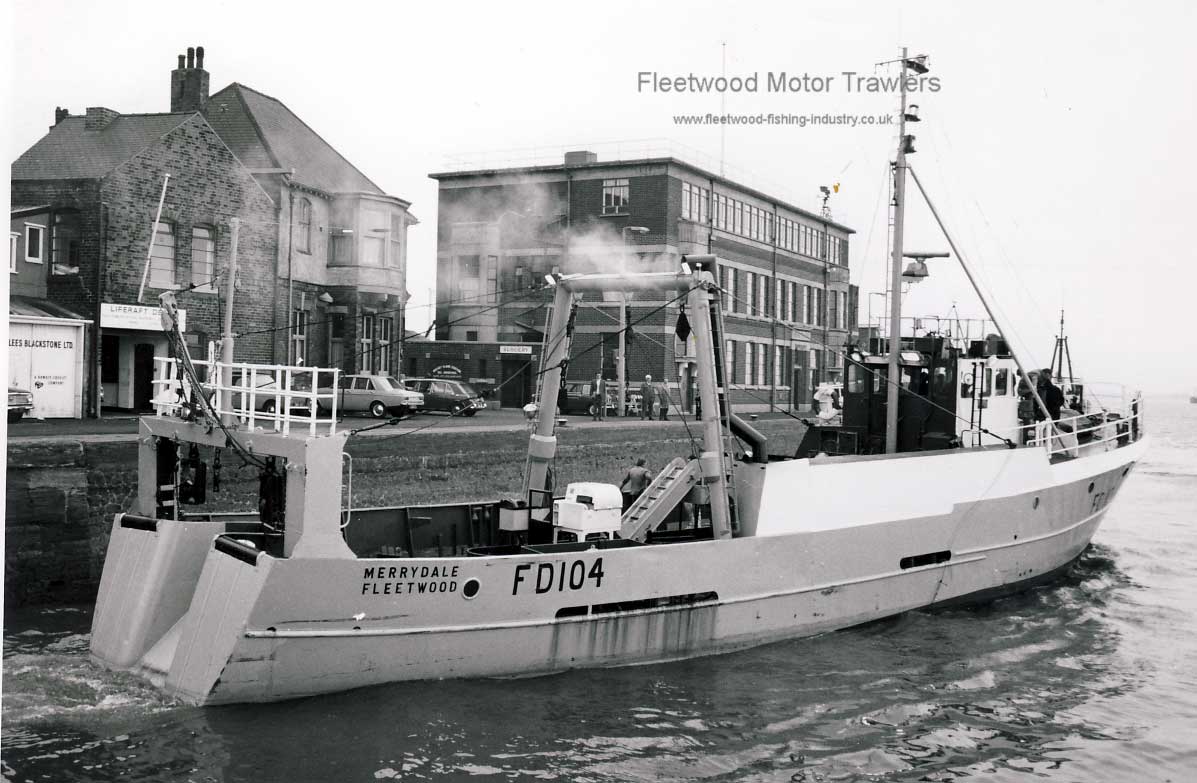
M.T. Merrydale – FD104

Technical

Official Number: 341748
Yard Number: 1278
Completed: 1970
Gross Tonnage: 123
Net Tonnage: 44
Length: 88′ 5″
Breadth: 21′ 7″
Depth: 10′ 9″
Built: R Dunston Ltd,Thorne
Owner: J Marr & Son Ltd

History

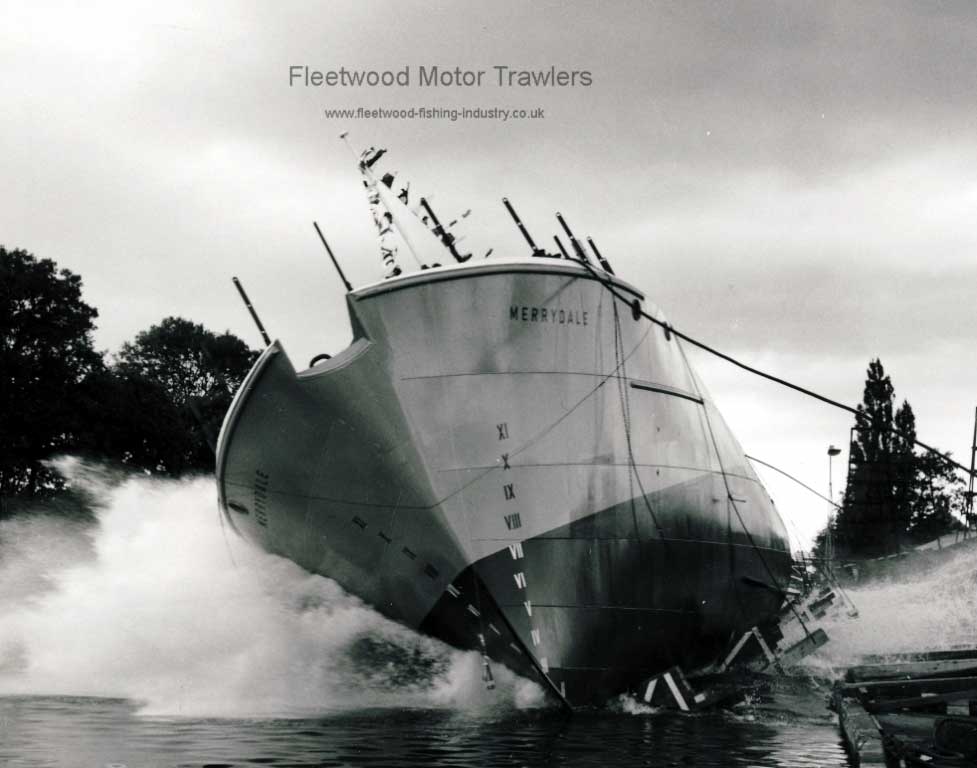
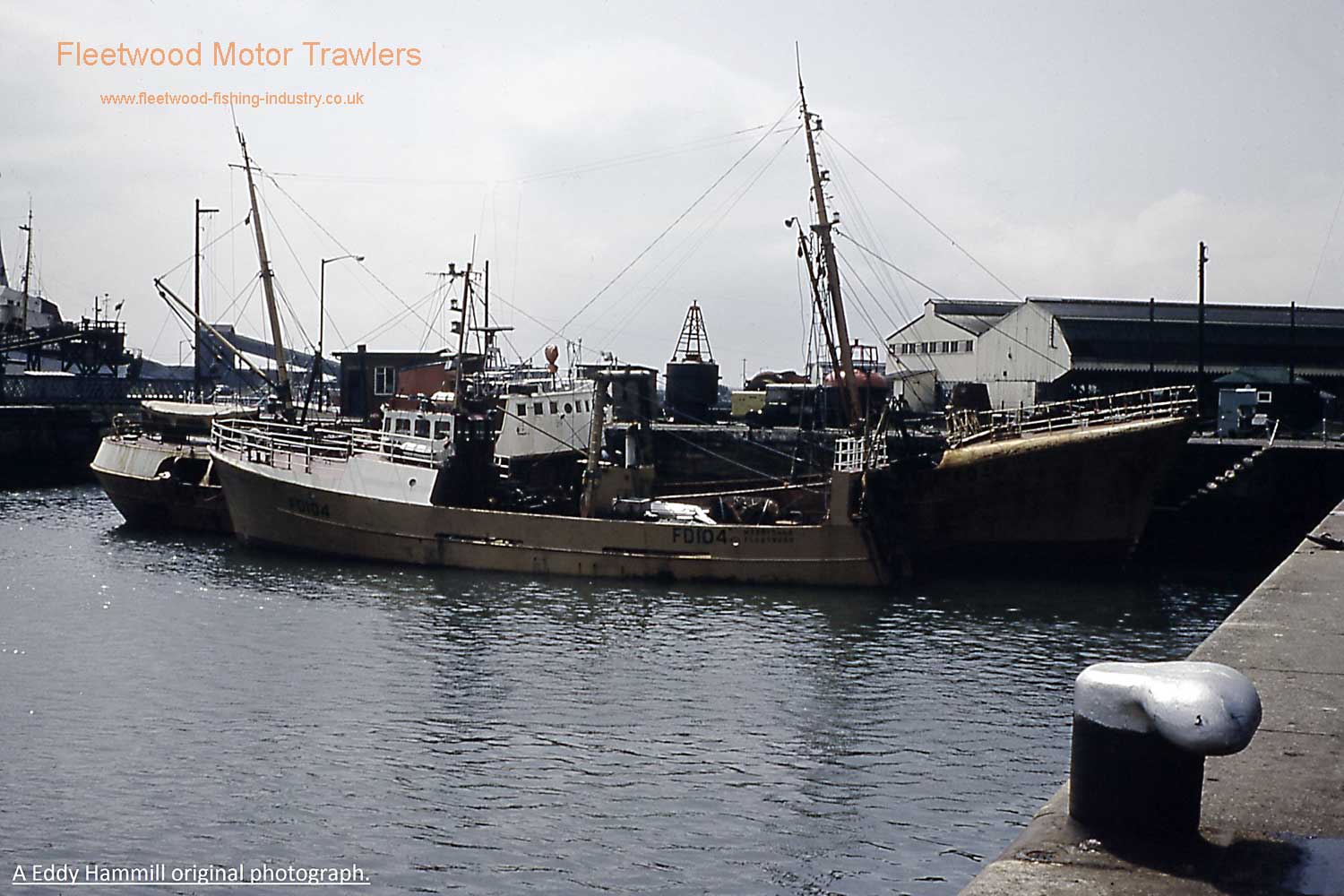
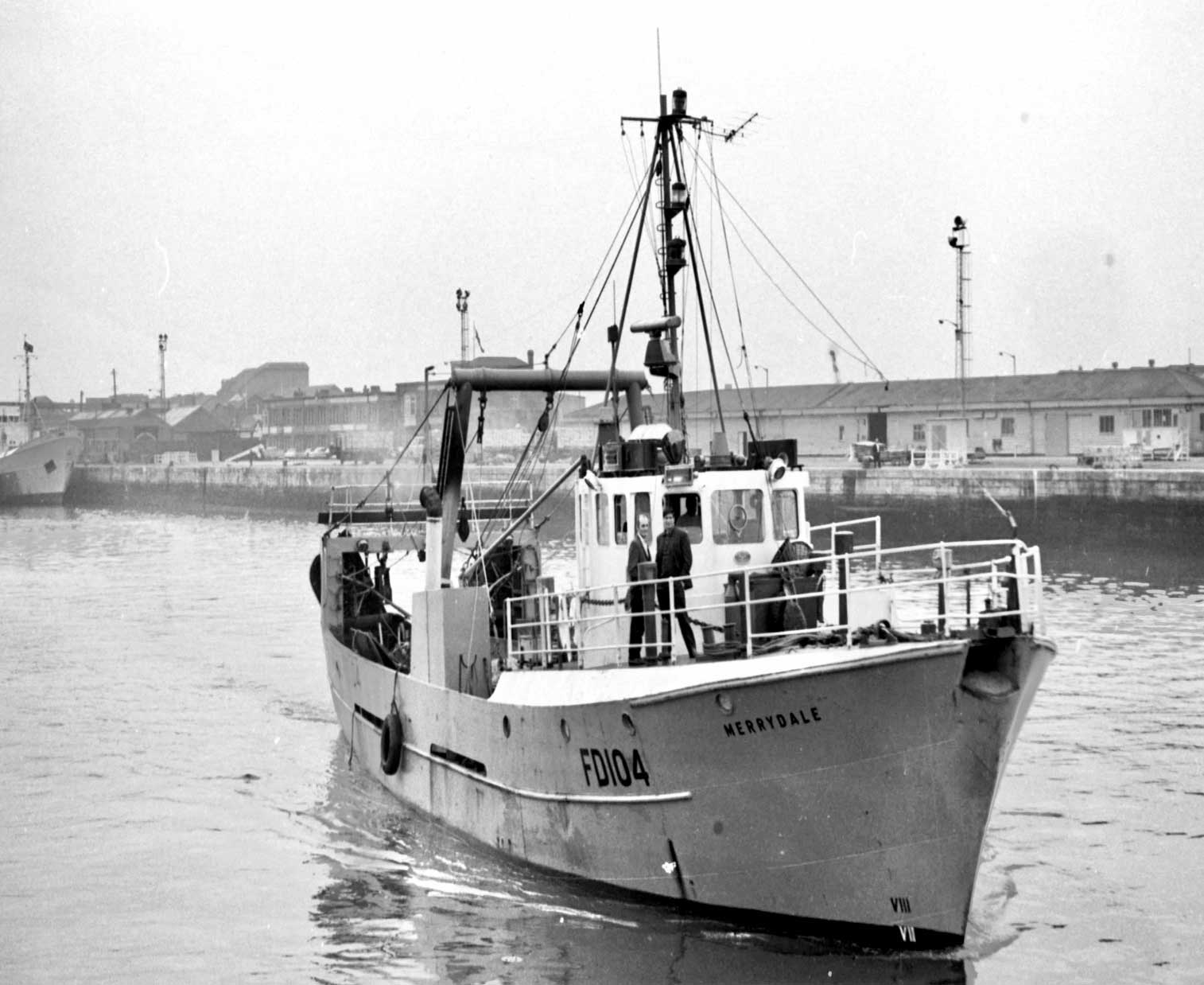
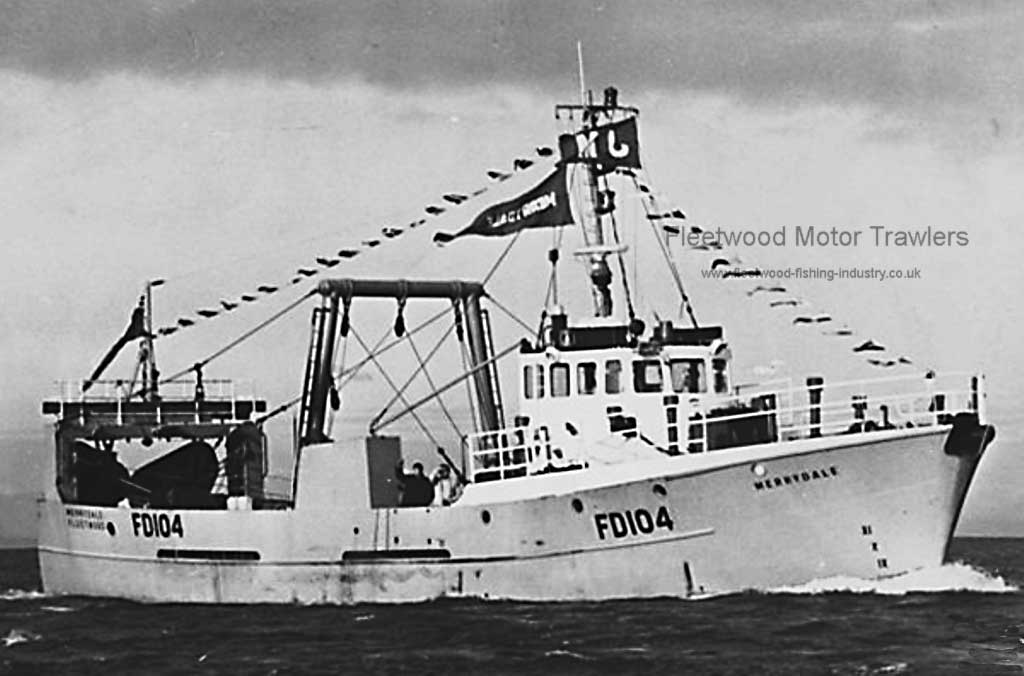
1970: To Fleetwood as a new vessel.
February 1970: Landed her first catch at Fleetwood under the command of Skipper John Banks. 325 Boxes was landed after 12 days at sea, including 80 of coley, to make £1,914.
1972: Lengthened in Humber by St Andrew’s Engineering Company to 88 ft.
1973: Sold to J N Ward and renamed RESOUND.
1993: Fishing from Valetta, registered at Malta and renamed ARIANNA PREMIR.

Click to enlarge images

M.T. Merrydale FD104

M.T. Merrydale FD104
Picture courtesy of Mark Stopper

M.T. Merrydale FD104

M.T. Merrydale FD104
Picture courtesy of Mark Stopper

M.T. Merrydale FD104

M.T. Merrydale FD104
Picture courtesy of The Ted Hammill Collection

M.T. Merrydale FD104

M.T. Merrydale FD104
Picture courtesy of The Frank Pook Collection

M.T. Merrydale FD104

M.T. Merrydale FD104
Picture courtesy of The JJ Collection

M.T. Merrydale FD104

M.T. Merrydale FD104
Picture courtesy of Mark Stopper

M.T. Merrydale FD104

M.T. Merrydale FD104
Picture courtesy of Phillip Dell

M.T. Resound

M.T. Resound
Picture (at Malta) from the Internet

Changelog
16/10/2016: Page re-published due to site problems.
16/09/2017: Removed FMHT watermark and added an image.
29/01/2018: Added an image.
24/09/2020: Added an image.

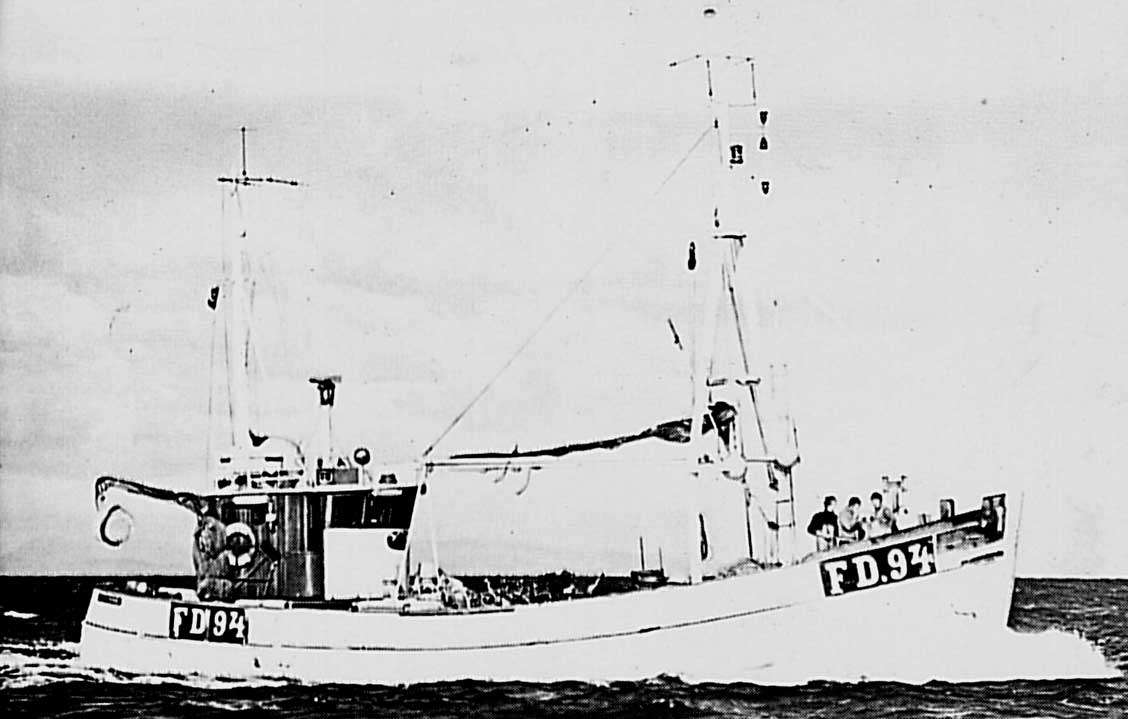
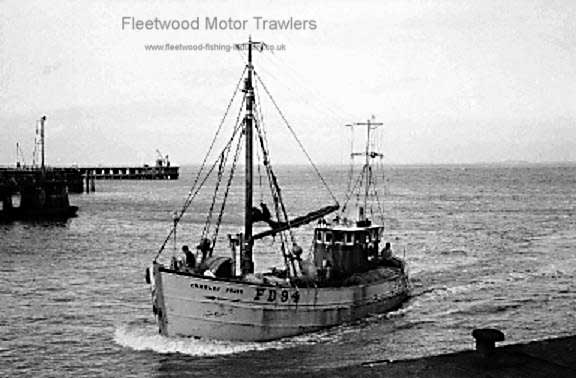
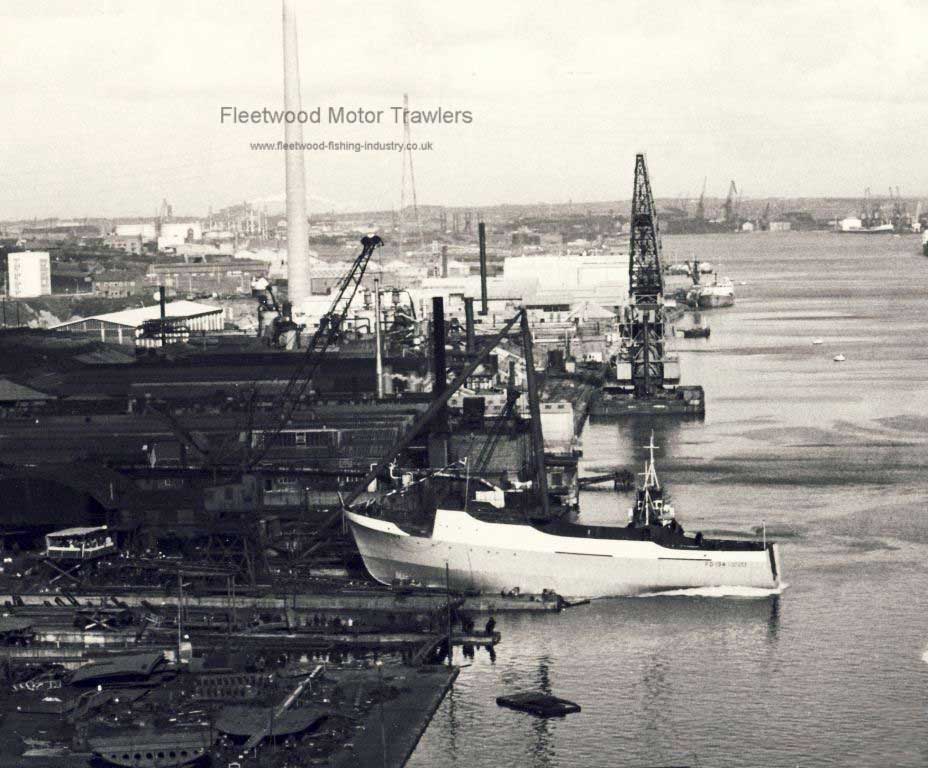
mfv Charmor – FD94

Technical

Official Number: 341764
Gross Tonnage: 48
Net Tonnage: 30
Length: 56 ft
Engine: 230bhp Diesel
Built: Esbjerg, Denmark
Owner: Otto Jensen

History

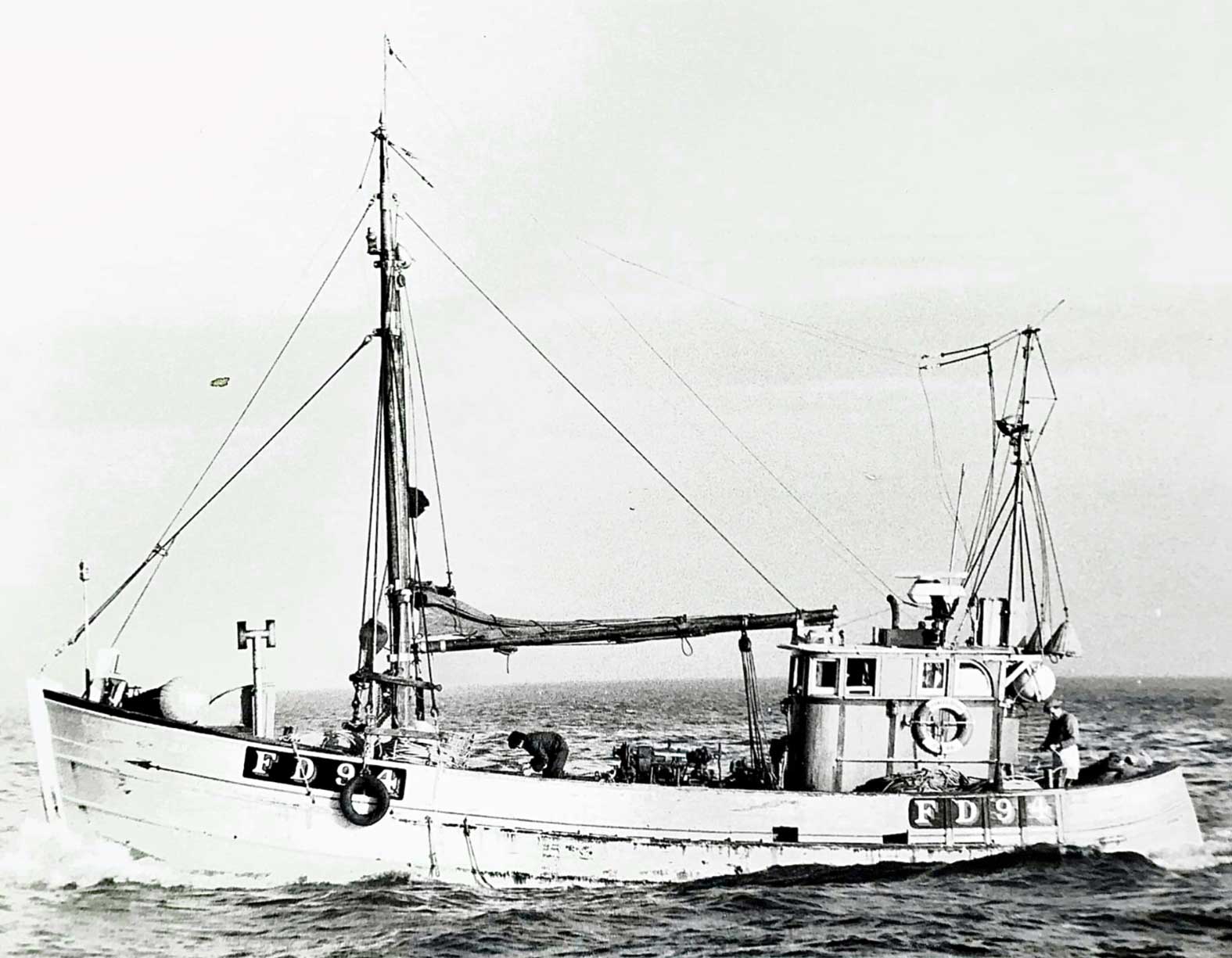
1973: Built at Esbjerg for Otto Jensen, Cleveleys/Fleetwood as a wood anchor seiner.
1981: Sold. New owner unknown.
10.09.2002: Renamed KRISTENBORG GY199
2003: Owned by Kevin Caffrey.
2010: Still fishing out of Grimsby.

Notes
June 1977 – 286 kits grossed £8885 from a 18 day North Sea trip.
Nov 1979 – 163 kits grossed £4874 from a 14 day trip.

Click to enlarge images

mfv Charmor FD94

mfv Charmor FD94
Picture from the Internet

Changelog
16/10/2016: Page re-published due to site problems.

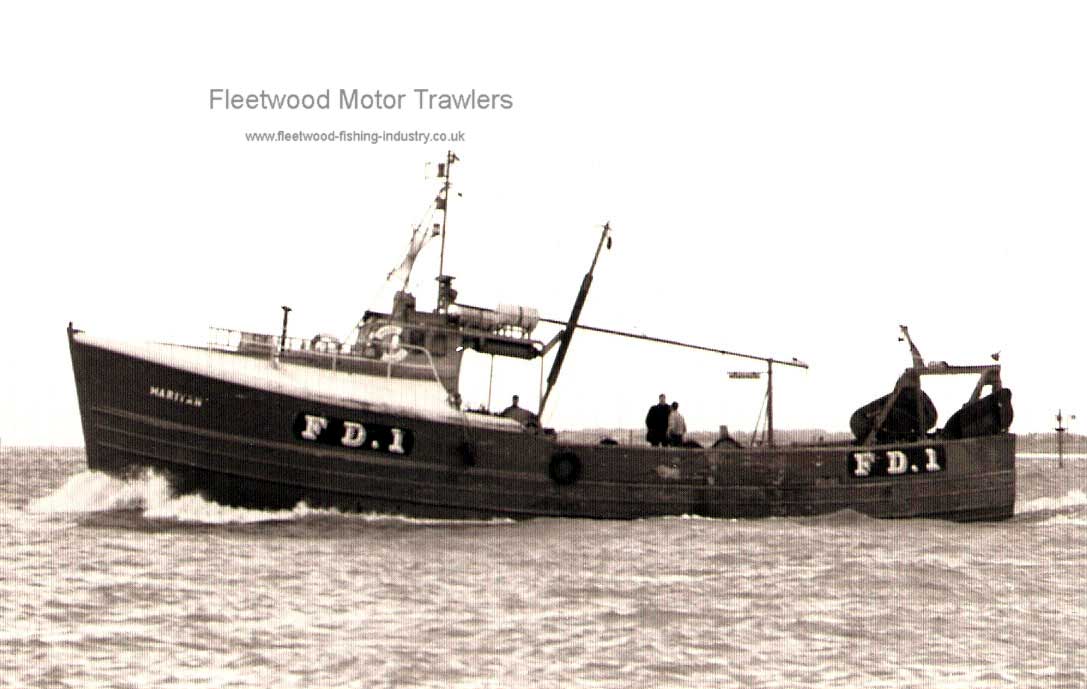
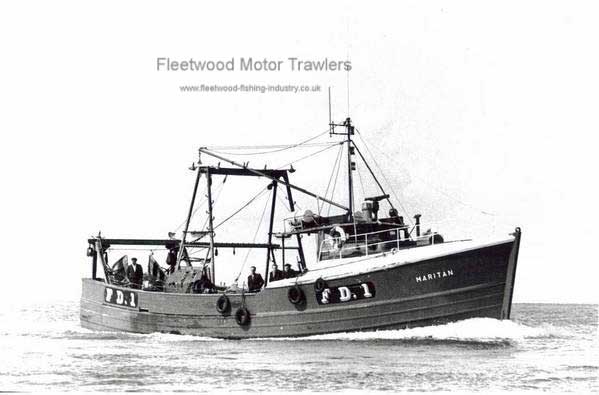
mfv Maritan – FD1

Technical

Official Number: 308716
Gross Tonnage: 81
Net Tonnage: 42
Length: 64 ft
Built: G & J Forbes of Sandhaven, 1968
Owner: Boris Howard & Dave Atkinson

History

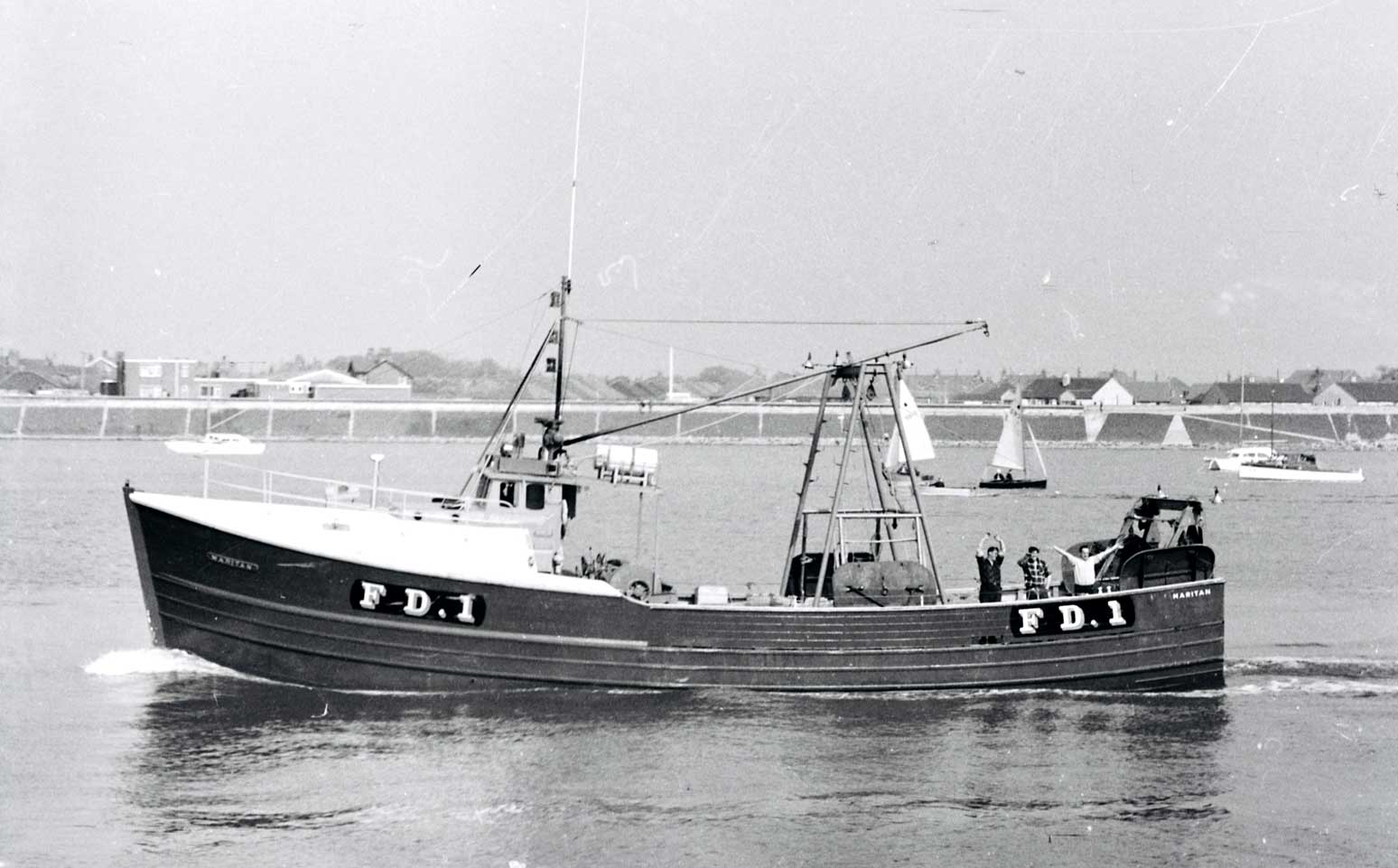
1968: To Fleetwood from new, she was an early example of the stern trawling system applied to modern smaller trawlers.
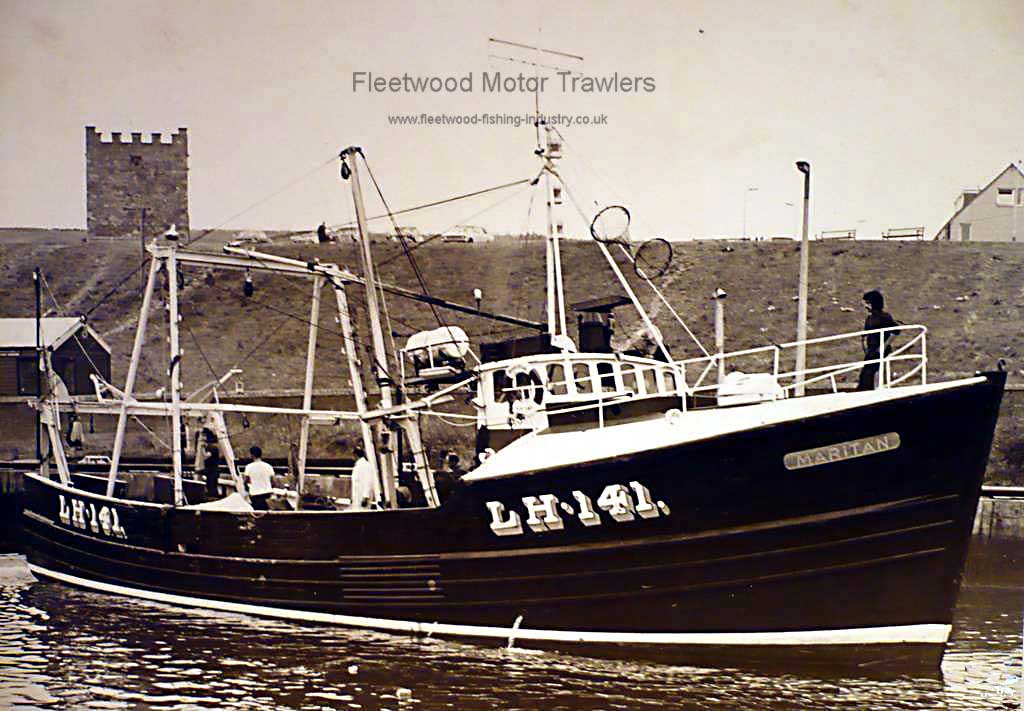
1974: Transferred to Leith as LH141. Owners Alexander B. Ritchie, Musselburgh and others.
1981: Registered as MARITAN BCK313 under the ownership of Moray Firth Fish Selling Co Ltd, Buckie.
19??: Port registration was changed to N315 (Newry) date unknown. Registered owner Charles Campbell, Kilkeel, Co. Down.
19??: Vessel was shelter decked and a new wheelhouse was added.
16th May 2002: Decommissioned.

Click to enlarge images

mfv Maritan FD1

mfv Maritan FD1
Picture courtesy of The Fred Baker Collection

mfv Maritan FD1

mfv Maritan FD1
Picture from the Internet

mfv Maritan LH141

mfv Maritan LH141
Picture from the Internet

mfv Maritan FD1

mfv Maritan FD1
Picture courtesy of The Phil Rogers Collection

Changelog
15/10/2016: Page re-published due to site problems.
19/10/2020: Added an image.

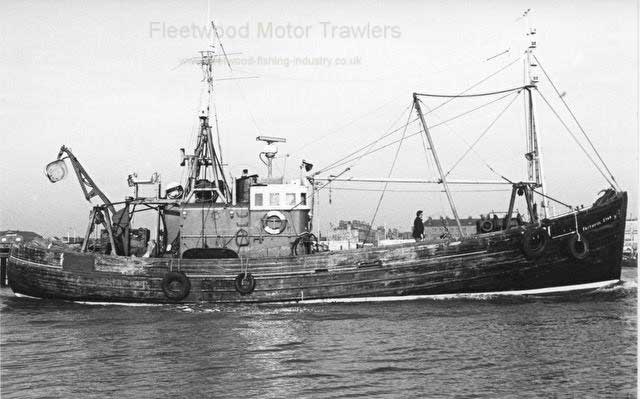
mfv Charles Böjer – FD94

Technical and historical information needed about this vessel. Please contact info@fleetwood-fishing-industry.co.uk

Technical

Gross Tonnage: 20
Net Tonnage: 20
Length: 51 ft
Built: G. Thomson and Son, Buckie

History

1956: Launched by Messrs G. Thomson and Son for Blackpool owners as CHARLES BÖJER. Registered at Buckie (BCK107).

Click to enlarge images

mfv Charles Böjer FD94

mfv Charles Böjer FD94
Picture courtesy of The Phil Rogers Collection

mfv Charles Böjer FD94

mfv Charles Böjer FD94
Picture courtesy of Shetland Museum & Archives

mfv Charles Böjer FD94

mfv Charles Böjer FD94
Picture courtesy of The Michael B Collection

Changelog
15/10/2016: Page re-published due to site problems.
05/05/2021: Added an image.

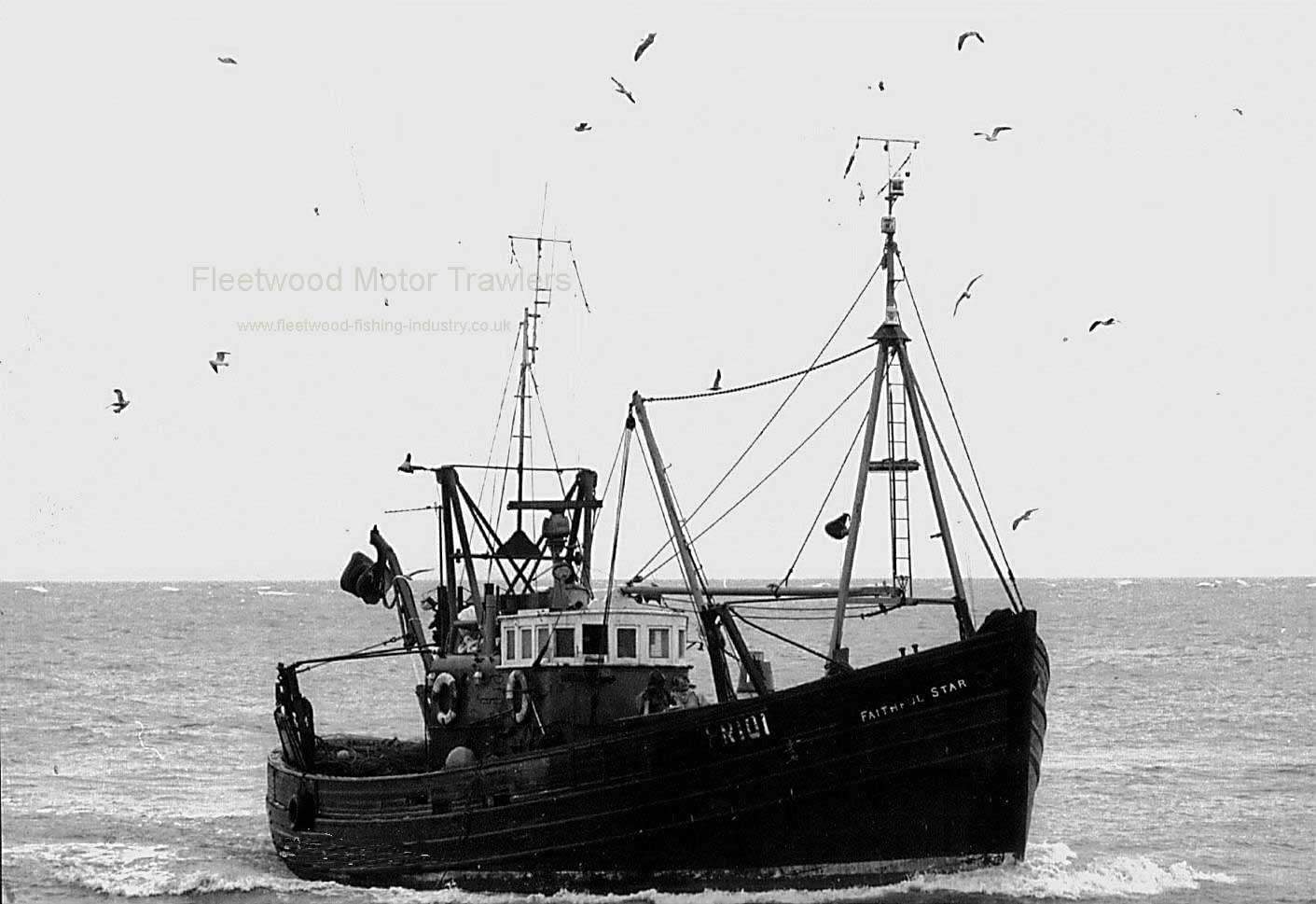
mfv Faithful Star – FR101

Information needed on this vessel. Please contact info@fleetwood-fishing-industry.co.uk

History

Built for Jimmy and Dodie Watt, Sandhaven in the early ’50s
Undated: Sold to Jim (Fairmer) Watt and Forbes West.

Click to enlarge images

mfv Faithful Star FR101

mfv Faithful Star FR101
Picture courtesy of The David Slinger Collection

mfv Faithful Star FR101

mfv Faithful Star FR101
Picture courtesy of The David Slinger Collection

Changelog
15/10/2016: Page re-published due to site problems.
15/09/2018: Added an image and removed FMHT watermark from existing image.

M.T. Vertrouwen – RY67

Information courtesy of Dick Massey

Technical

Gross Tonnage: 31
Length: 43.4 ft
Breadth: 15.5 ft
Depth: 6.4 ft
Built: 1943, Holland

History

After selling the CRYSTAL SEA, the plan was to buy a small beam trawler. The herring season was on at the time, with Dutch vessels in at Peel buying the herrings for transportation to Europe, and when talking to one of the Dutch trawler owners, he recommended that before buying a beam trawler, I should first get come experience, as beam trawling has a few more dangers than normal side or stern trawling, particularly the danger of capsizing.

Taking his advice and talking to the ship broker John Appelboom, he agreed this was a good idea and could be incorporated into a purchasing contract. Being familiar with Rotterdam, we agreed that I should make my base at the Scandinavian Seamen’s Home, which was situated close to John’s office, and after further discussion decided we would spend some time looking at small beamers before making up and signing a contract, as the seller must agree to have me aboard for several weeks.

The fishermen of Zeeland worked from small ports situated amongst the southern islands of Holland. Stellendam is within a couple of hours’ drive of Rotterdam, and the fleet of beamers there ranged from ocean going vessels to ten metre shrimpers.

Jan van Ours was the owner of the VERTROUWEN, SL10 as she was known in the port. Jan was very keen to sell as he wanted to buy a larger vessel. VERTROUWEN was built just after the war, about 1947, 50 feet long, 18 feet beam with a draft of 7 feet, fully riveted and very strong, with a full round stern providing lots of buoyancy.

On deck, everything was strongly constructed, the decks being 2 inch thick Oregon planking. A very stout mast carried the two long derricks used to handle the beam trawls, each weighing over one ton dry, together with a large four drum used to haul the beam trawls, and the auxiliary wire drums to raise and lower the derricks. This winch was powered by a flat belt off the front of the main engine.

The engine developed one hundred and fifty horsepower, it was a heavy duty Deutz four cylinder motor. All this heavy duty equipment made for a very robust and a seaworthy vessel, the ideal combination for an amateur beam trawling crew. After a couple of weeks Jan and I agreed on a price, and with a designated changeover date, the contract was signed.

In the meantime we were fishing, and landing the catches at Scheveningen fish market, the earnings going to John and his crew. Shortly after the delivery date, my wife Brenda arrived from the Isle of Man to help take VERTROUWEN to her new home.

Departing from Stellendam was a happy and sad affair. Sad for Jan and his crew, as they had worked the boat together for so many years, also sad the boat was leaving Holland, but on the other hand, Jan was happy because he received a substantial grant from the Dutch Government – I had signed a document agreeing that the SL10 would never again sail under the Dutch flag as a fishing boat.

Once clear of the channel leading through the shallows of the coast, our course took us along the Belgian and north French coasts before crossing over to the English side near Dungeness. From there we followed the English coast until we arrived in Brixham, Devon, for a rest before the next part of the voyage around Land’s End and north to the Irish Sea and the Isle of Man.

Departing from Brixham with our diesel tanks full, we had calm seas, and the Decca navigator making navigation easier, until passing St David’s head on the Welsh coast that same component went “pop” in it’s control box and that was the end of it’s usefulness and we were back to the coastal terrestrial navigation.

As we approached Bardsley Island at the north end of Cardigan Bay, the weather changed, the wind freshening from the north, and by this time we had been going for two days and needed a rest, and the nearest shelter, near Pwlhelli, was Hell’s Bay – a tense arrival, running into a strange place in the middle of the night with a strong wind whipping up the spray, together with the rain.

Once the anchor was down and the engine stopped, the wind sounded dramatic in all our rigging. After a meal and a good sleep, we woke to a bright day of sunshine, with the wind in the north, the bay was not at all hellish. After another night here, the wind eased enough for us to move on to Holyhead, where we sheltered for another couple of days before making the passage from Anglesey to Douglas.

From Stellendam to Douglas is just over seven hundred miles, hand steering all the way. The weather had been kind to us until we reached the Llyn peninsula with the high mountains of north Wales close by helping to make the northerly winds very gusty.

Our arrival in Douglas harbour made a bit of a stir, as this was the first beam trawler seen in the inner harbour. Now I had the paperwork for the Customs house to sort out, and importation duty to pay, and the boat had to be measured for UK registration and new registration numbers issued and a new home port. SL10 became RY67 of Ramsey. Our newest adventure had begun.

Taking the “VERTROUWEN” into Fleetwood’s Jubilee Quay for the first time, Paul Childers was waiting on the quay full of enthusiasm, along with Mick Ryan, who were to be my crew – Paul had worked on my previous two boats. Michael Ledley, our earlier crewman, had joined the merchant navy, and was later to become the Master of many large ferries and cargo ships. We are all very proud of his achievements.

Michael Ryan had owned several small trawlers and had rigged his current vessel “Gracie” for double beam trawling – she was in fact the first double beam trawler to be owned in the port. But the Gracie was suffering from old age. Mike had been a good friend from my first visits to the port; he was also to join me as a very important member of the crew.

Later, Reggie Hull, also a long time fisherman both in large deep water trawlers and inshore fishing, also joined us. In fact, we were four capable fishermen, each with his own expertise to add to this new venture. Paul and I were to take the boat out to the Shelley Flats ground to try out the new nets Boris the net maker had made for the boat, this being the first time I had put the beams in the water since taking out the boat without the Dutch crew.

All went well for a couple of tows. Then the wind and sea increased and I decided to head back for the quay. While getting the port side gear on board, the starboard cod end slipped back off the rail and fouled the propeller. Trying to clear it as the weather deteriorated, with the main part all secured, putting the engine in gear ahead everything worked okay. Back in Fleetwood I berthed against the stone quay at north end, and when we dried out at low tide, discovered it was only the cod line that was foul.

Starting our next trip with a full crew, on our return with our fist catch of Dover Soles I was able to negotiate a deal with Bob Ramster, he being one of the better fish salesmen of the port, and I agreed to deal with him only – this was trusting that we could catch soles. Bob had been watching our catch rate being at least double and even treble that of other Jubilee Quay fifty footers. This was very promising, and happily our success continued.

After about 8 months, we all felt in need of a holiday (it was the children’s school summer holiday time), so we took a couple of weeks of, and while Mick and Paul stayed in Fleetwood, Reggie brought his family to the Isle of Man for a change of scene, staying at our house, while we moved on board the boat. I wished to take a look at places up the coast that we had been passing by while fishing, so we headed for the Clyde.

The weather was good, and our first stop was Lady Bay at Loch Ryan, where we entered and found an anchorage clear of the ferry route from Stranraer to Larne. The boys were awake early to see this new place – from here we traveled north and east exploring the shores of the Clyde, visiting Campbeltown, Tarbert, Lochgilphead, and round to Rothesay – both boys caught their first fishes on hand lines as we rested at anchor here and there.

We passed inside Arran island, and close by Ailsa Craig. On the longer sea passages, the boys got a little bored, being five and three years old, and were playing “boats” in a tub of water on the deck as we motored along – imagine it. Altogether we enjoyed a very pleasant break.

On our return to the island, we found Reggie and his family had enjoyed their time exploring the Isle of Man, except for their 12 year old son, who had been bitten by the dog and had been taken to hospital for an anti-tetanus injection, then he slipped on some rocks at the beach and cut himself badly, requiring stitches. When he fell out of a tree and broke his arm, and again walked into the outpatients department for a third time, the nurses said “you again, we know what you did – you didn’t say hello to the fairies when you went over the fairy bridge” – he didn’t.

As the season came round and the Belgian trawlers returned, this increased our knowledge of the sole fishing grounds in the south of Liverpool Bay. The Belgians had been continuously chasing the soles for the last forty years with wooden side trawlers of eighty feet, then increasing in size, before double beam trawlers proved to be super catchers of soles. In the mid seventies, chain mats were found to open up a lot more fishing grounds. The chains allowed the fish into the nets, but not the stones. This was a different league from ours as whatever was to be dragged over the sea bed required horsepower and lots of it.

After a year or so, the interest in beam trawling was starting to grow, but nobody else had as yet committed to buying a vessel. Mick Ryan was the first to follow me into beaming with TINY VERTROUWEN, registered in Fleetwood, soon to be followed by Frank Clarkson with the Nordsea – now we had the nucleus of a beamer fleet on the English west coast. Both Mick and Frank went on to own substantial sized vessels over the coming years.

Brian Fitzgerald, a local trawler skipper, also became interested in beaming, and came out with us for a few days. All was going well until we picked up a large boulder in the starboard side gear. While trying to heave the net, we had a severe list. Whilst this was going on, a large ferry passed, setting up a large wave. As the wave hit us, filling the decks to the top of the rails, I released the winch brake and the boat, now free of the weight, bobbed up. When the decks were clear of water, Brian was missing, but after a few frantic minutes, he was found hiding behind the wheelhouse.
As soon as we had the trawls retrieved, Brian was pleased to be taken back to Fleetwood, and that was the end of his interest in Beam Trawling.

I was becoming more ambitious and wanted to move on to a more comfortable beamer. Ronny Bond and his two sons had just returned from New Zealand and Ronny was interested in buying the top earner of Jubilee Quay, this being my VERTROUWEN. John Appelboom had found me a sixty foot vessel, four years old, in Stellendam. I made a quick trip over to see the boat was worthwhile. Yes, I would buy, but was Ronny really interested in buying by current boat?

Back in Fleetwood, Ronny was not too sure. With fuel and ice on board, I made another trip. The Bond trio were on the quay when we were unloading our catch. Ronny was adding up the baskets of soles and calculating their value. That was enough for Ronny and his sons – the next day a contract was signed, the money was paid into our bank, and the deal was done.

Click to enlarge images
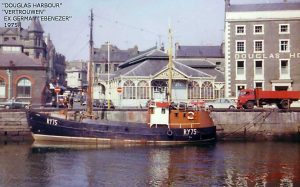
M.T. Vertrouwen RY67

M.T. Vertrouwen RY67
Picture courtesy of Dick Massey

Changelog
15/10/2016: Page re-published due to site problems.
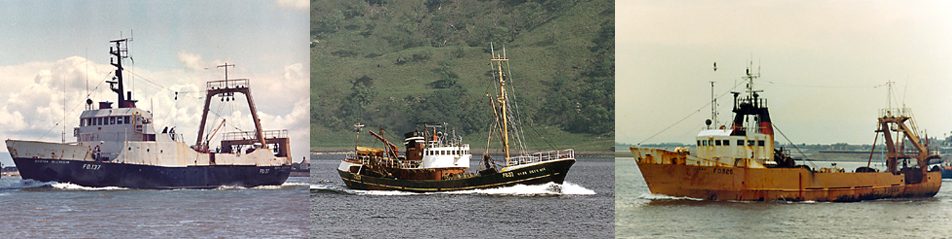
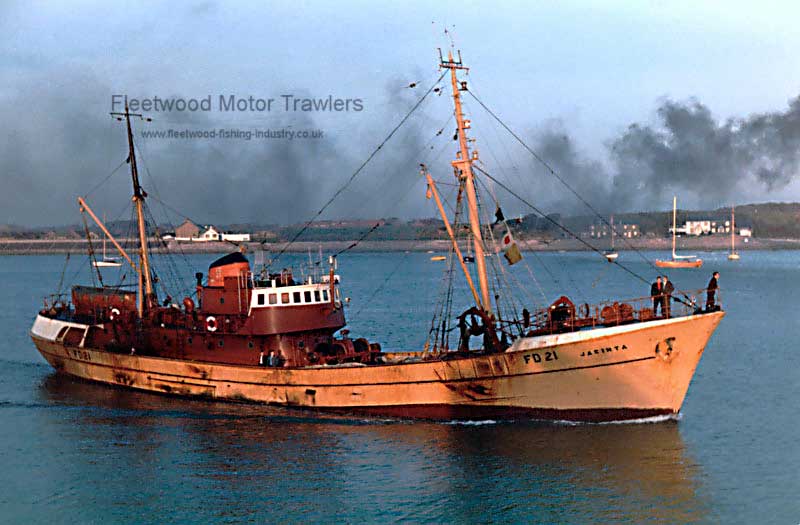
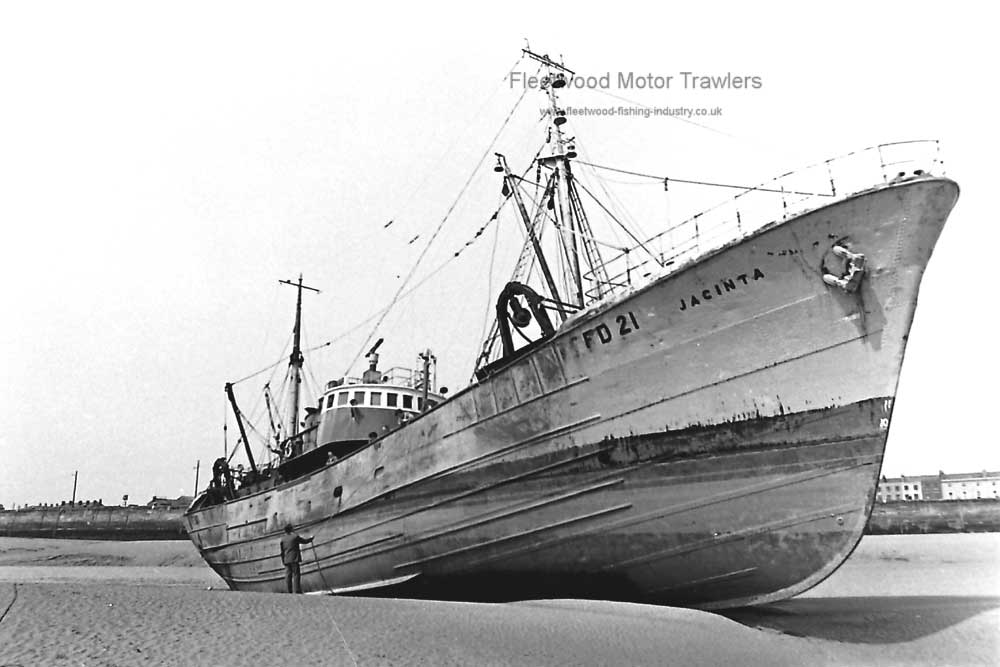
M.T. Jacinta (2) – FD21

Technical

Official Number: 185302
Yard Number: 1404
Completed: 1955
Gross Tonnage: 334
Net Tonnage: 113
Length: 132.5 ft
Breadth: 26.7 ft
Depth: 11.7 ft
Built: Cochrane & Sons Ltd, Selby, 1955
Engine: 772bhp 7-cyl Mirlees
Speed: 11.2 knots

History

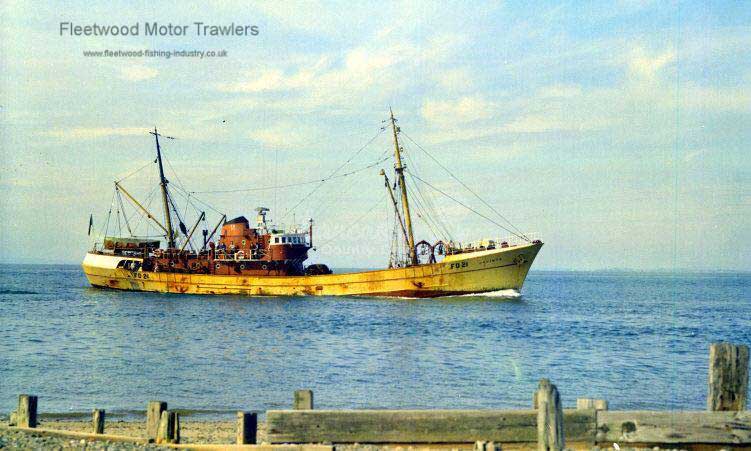
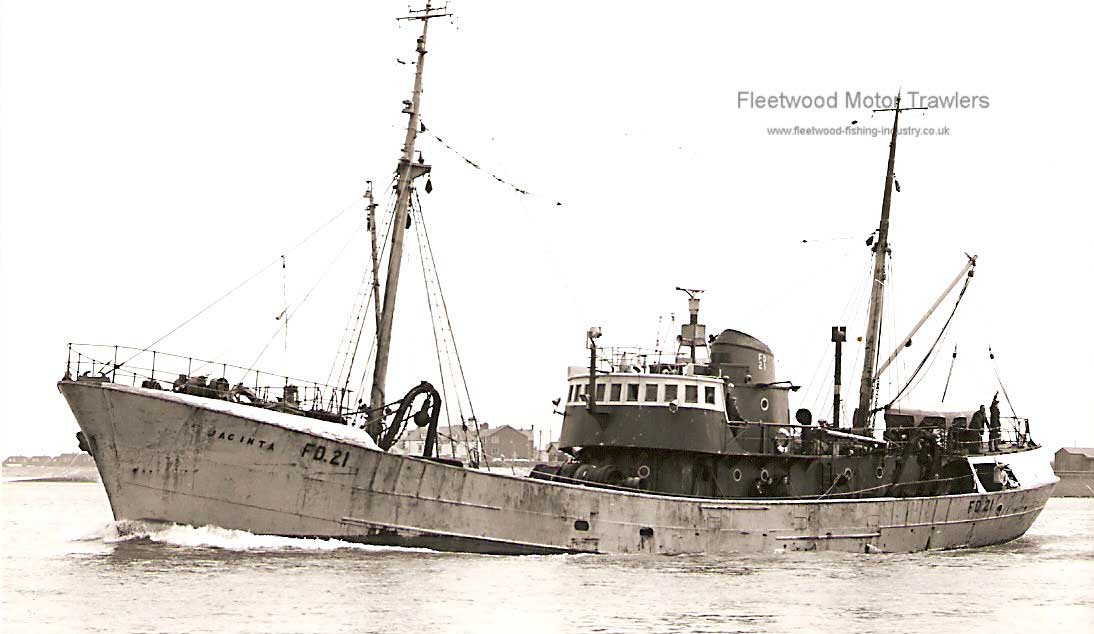
1955: Completed by Cochrane & Sons Ltd, Selby, for City Steam Fishing Co Ltd, Hull as JACINTA.
06.09.1955: Registered at Fleetwood (FD21).
16.03.1962: Sold to Dinas Steam Trawling Co Ltd Fleetwood. (J Marr subsidiary).
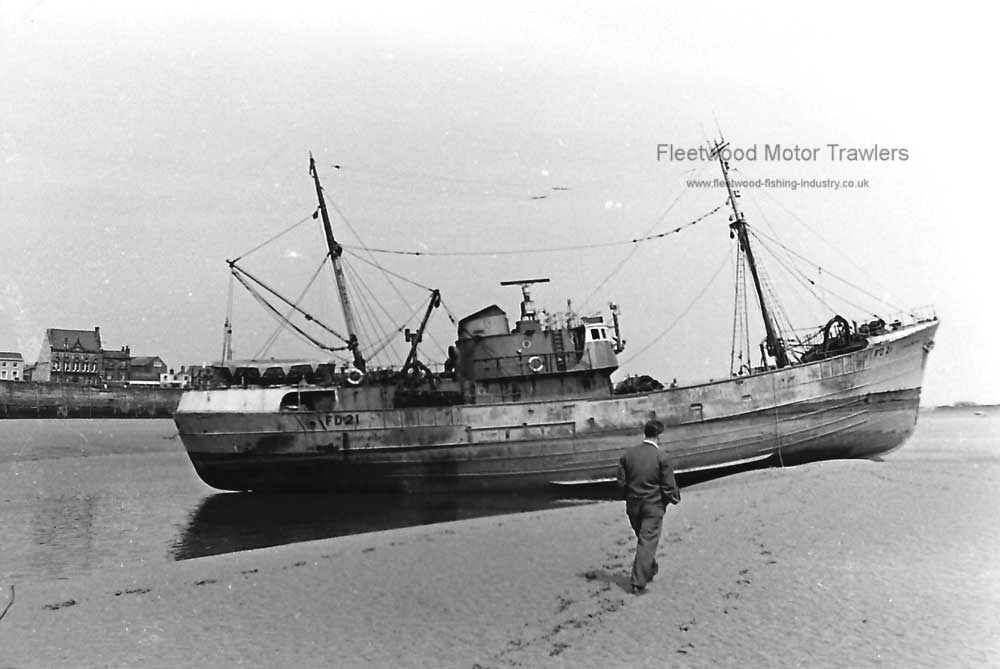
22/05/1969: Outbound. Grounded on Tiger’s Tail. Refloated on next tide and proceeded.
06.07.1970: Sold to Bon Accord Steam Fishing Co Ltd, Aberdeen (FD21).
12.1971: Sold to shipbreakers P W MacLellan Ltd, Bo’ness.
26.12.1971: Fleetwood registry closed.

Click to enlarge images

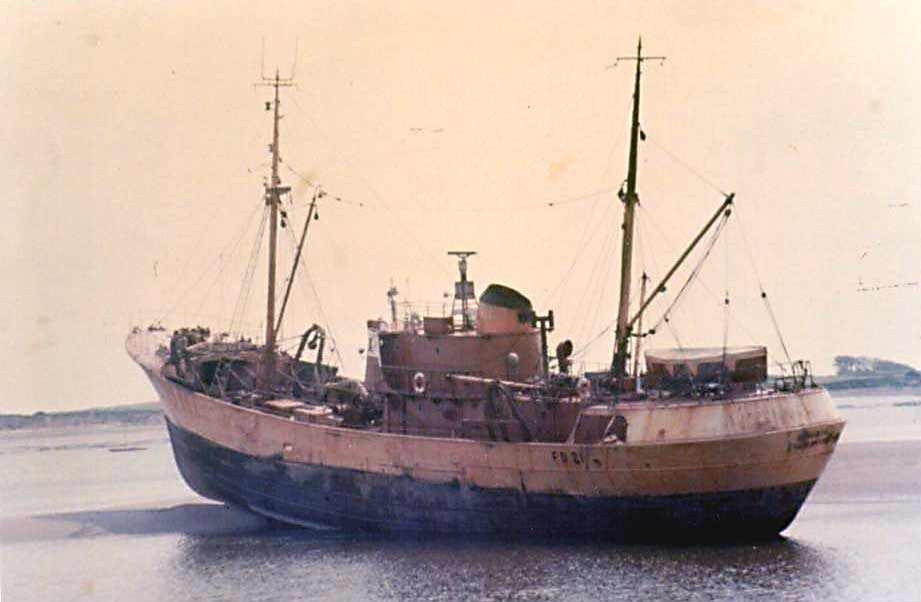
jacinta3

M.T. Jacinta FD21

M.T. Jacinta FD21
Picture from the Internet

M.T. Jacinta FD21

M.T. Jacinta FD21
Picture courtesy of Fred Baker

M.T. Jacinta FD159 Picture © Peter Brady

M.T. Jacinta FD159
Picture courtesy from the Internet

M.T. Jacinta FD21

M.T. Jacinta FD21
Picture courtesy of The Stephen Myerscough Collection

M.T. Jacinta FD159 Picture © Peter Brady

M.T. Jacinta FD159
Picture from the Internet

Changelog
14/10/2016: Page re-published due to site problems.
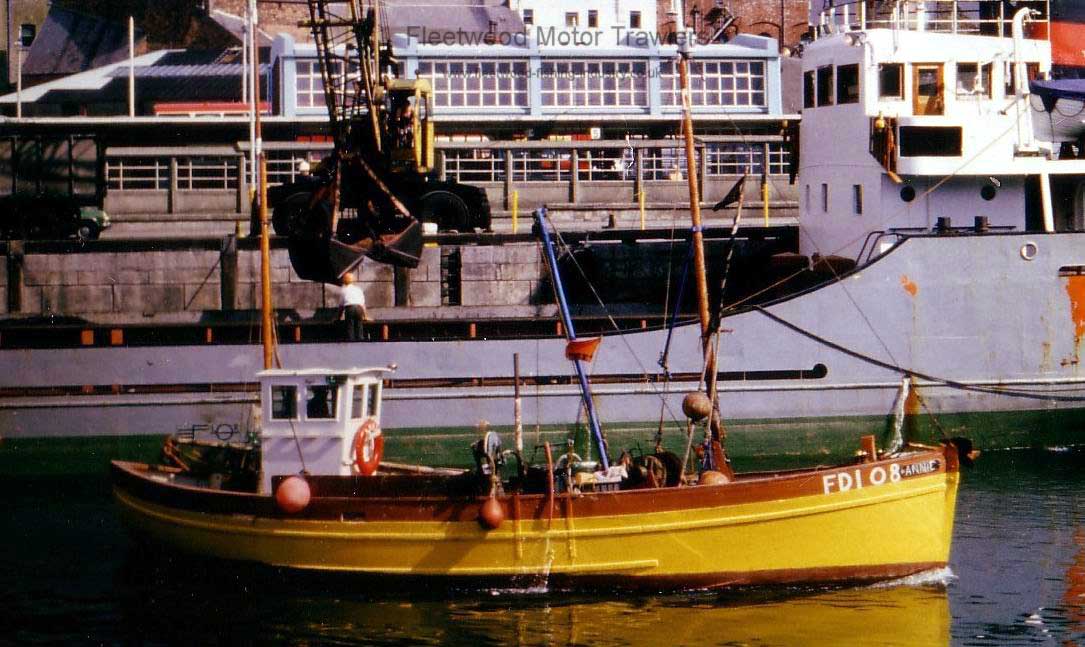
25/03/2017: Removed FMHT logo from images.
17/08/2017: Added an image.
19/07/2019: Added an image.

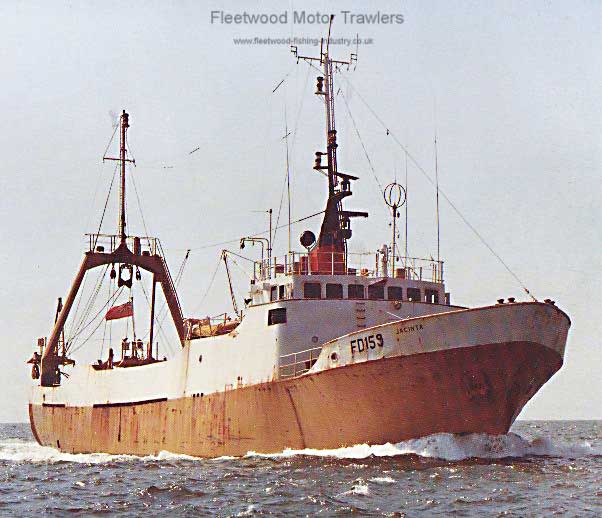
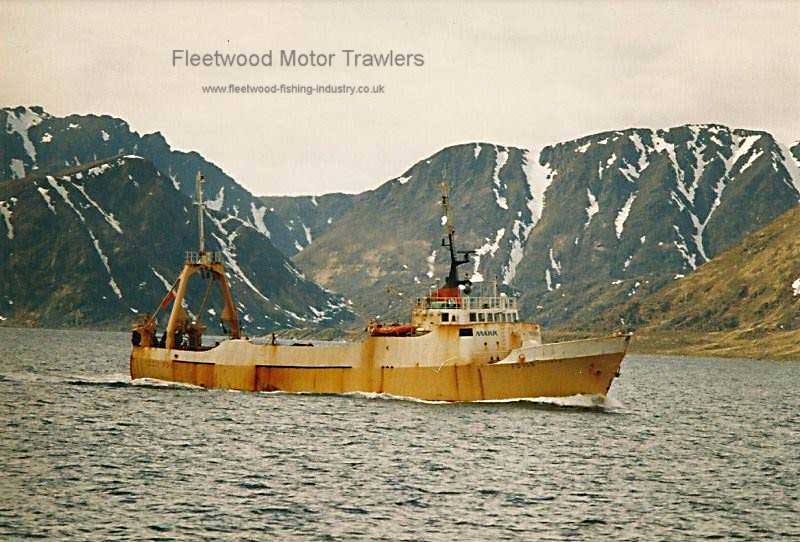
M.T. Jacinta (3) – FD159

Technical

Official Number: 341758
Yard Number: 322
Completed: 1972
Net Tonnage: 178
Length: 142′ 8″
Breadth: 32′ 1”
Depth: 12′ 10”
Built: Clelands Shipbuilders Ltd, Wallsend
Owner: J Marr and Sons Ltd

History

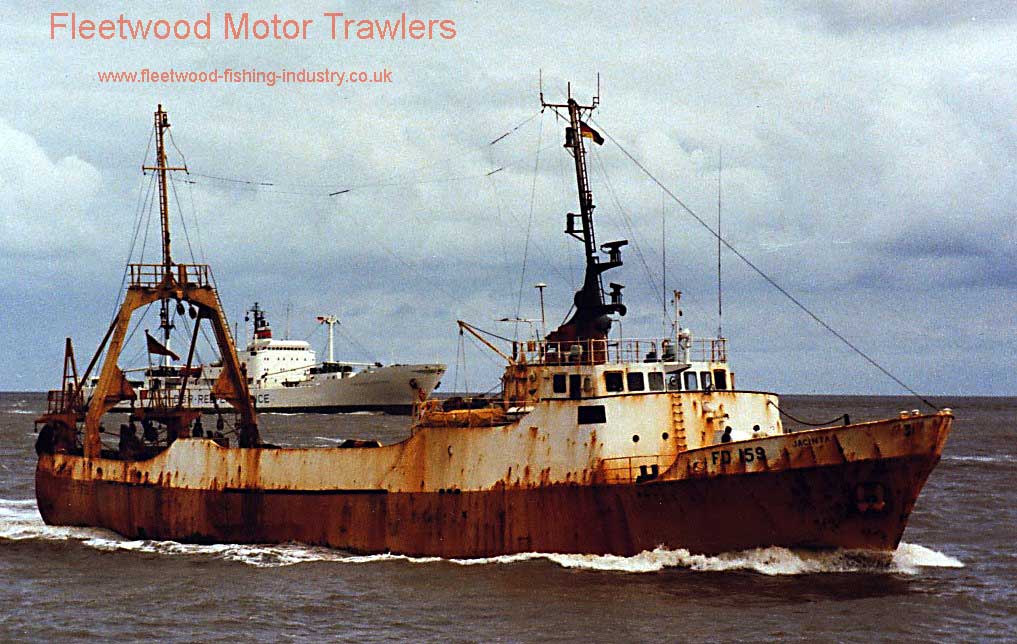
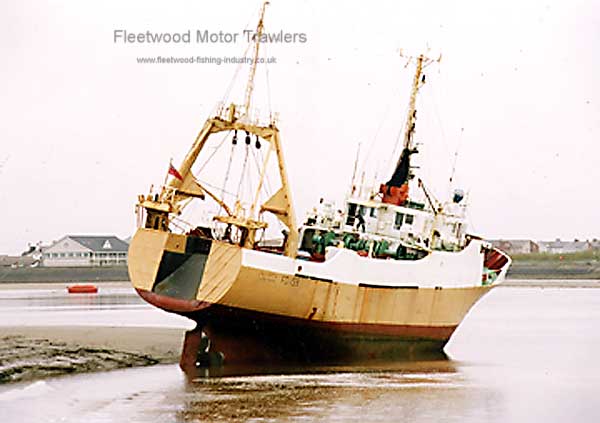
1972: Launched by Clelands Shipbuilders Ltd, Wallsend for J. Marr & Sons Ltd, Fleetwood as JACINTA. Registered at Fleetwood (FD159).
1975: Became the record breaking vessel for a Fleetwood wet fish catch when she landed 188 tons after a 19 day trip to the Icelandic fishing grounds.
1982: Transferred to Hull.
1986: Britain’s top earning trawler when her catch value was over £1.3 million.
February 1991: Skippered by Dennis Beaumont, JACINTA set a British record catch landing 230 tons which sold for £270,516.
1994: Top earning British trawler earning over £1.9 million over 10 months.
09/02/1995: Left Hull under tow for Fleetwood to become the focal point of a maritime museum after engine repairs were judged too costly.
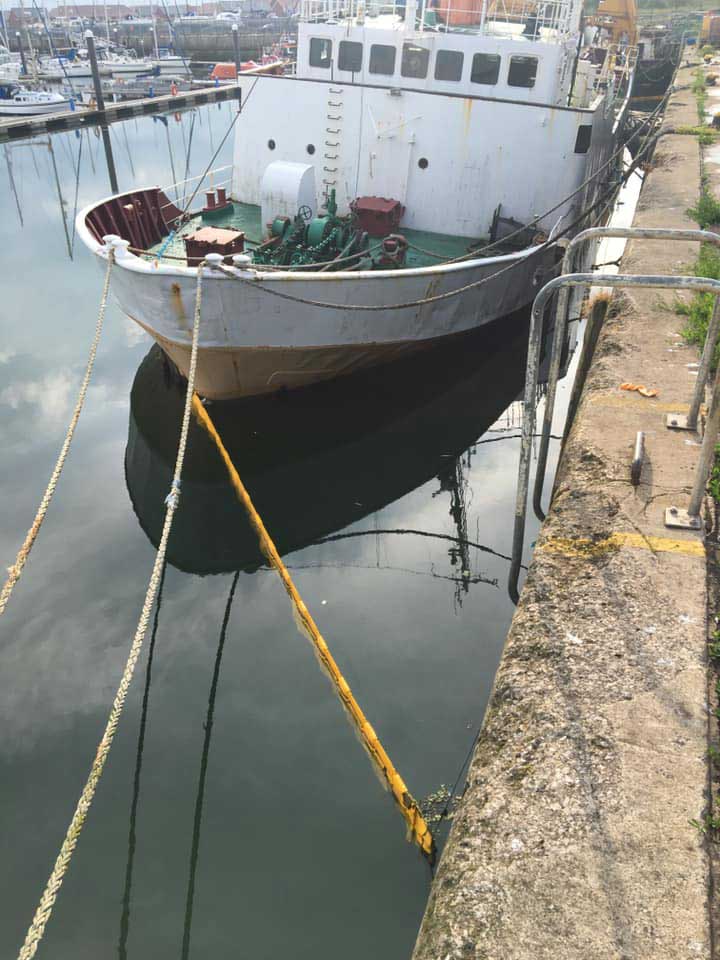
16/06/2020: In dock, developed a leak and sank alongside. Pumped out but judged too unseaworthy to move to a repair facility. Awaiting scrapping.

Notes

As a trawler working out of Fleetwood, The JACINTA became the most famous stern trawler of her generation. She returned to port with record catches and soon covered her building costs many times over. After years at sea, her engines failed and she seemed doomed for the scrapyard. However, a group of local Fleetwood people rallied to save her and she was bought from her owners for just one pound, and was towed home to Fleetwood. She was then fitted with a new engine to enable her to go to sea and attend heritage festivals.

In her 23 years at sea she earned over 17.3 million pounds.

Click to enlarge images

M.T. Jacinta FD159

M.T. Jacinta FD159
Picture courtesy of The JJ Collection

M.T. Jacinta FD159

M.T. Jacinta FD159
Picture courtesy of The Wilf Cartmel Collection

M.T. Jacinta FD159

M.T. Jacinta FD159
Picture from the Internet

M.T. Jacinta FD159

M.T. Jacinta FD159
Picture courtesy of The JJ Collection

M.T. Jacinta FD159

M.T. Jacinta FD159
Picture from the Internet

M.T. Jacinta FD159

M.T. Jacinta FD159
Picture from the Internet

Changelog
14/10/2016: Page re-published due to site problems.
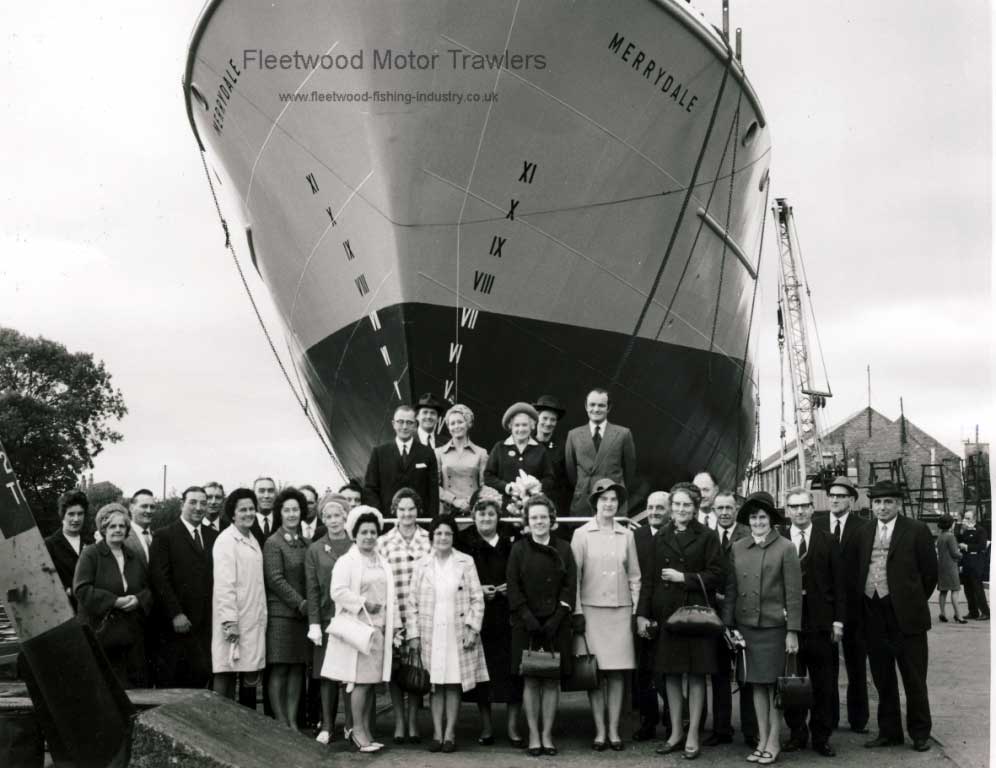
10/09/2017: Removed FMHT watermark and added an image.
21/06/2020: Added an image.

iv Advance – FD158

Technical

Net Tonnage: 10.98
Length: 33′ 1” ft
Breadth: 10′ 5” ft
Depth 4′ 2” ft
Engine: Russell-Newbury

History

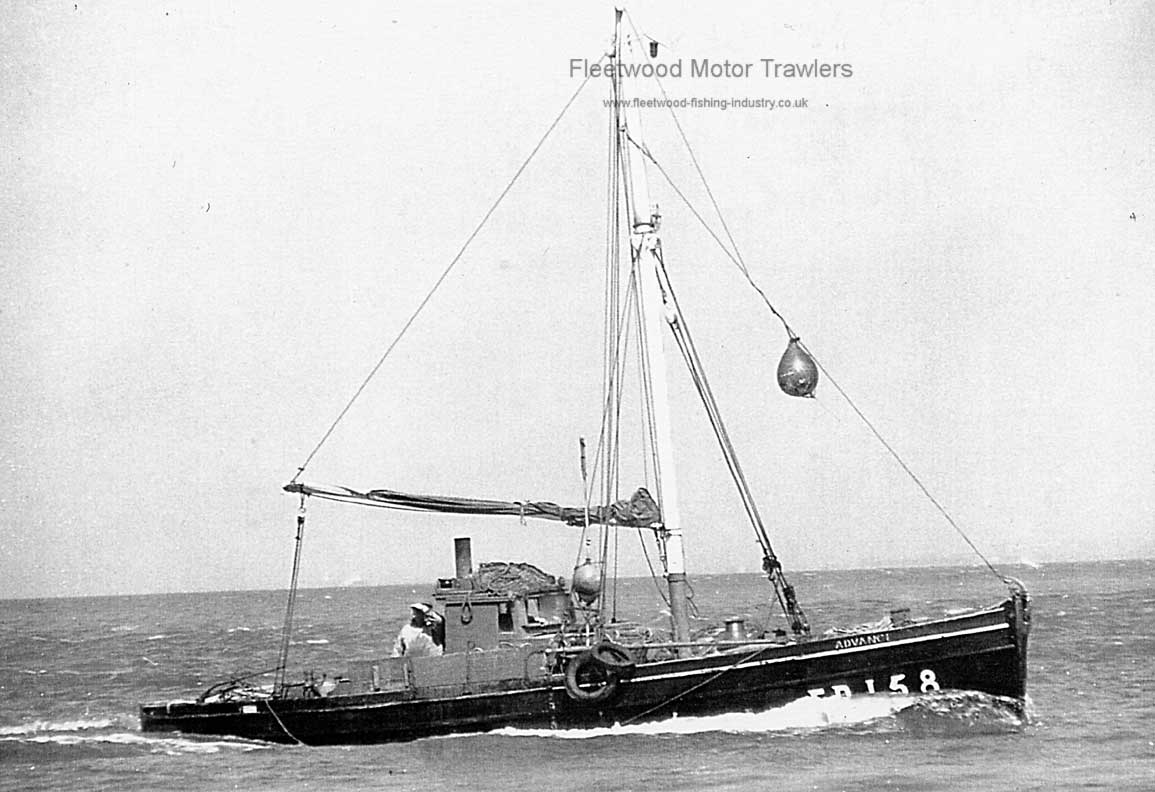
1898: Built by William Crossfield of Arnside as ADVANCE for Christopher Ainsworth of the Watch House, Knott End.
29/09/1898: Registered by owner at Fleetwood (FD155).
15/04/1905: Sold to William Miles of 21 Lower Lune Street, Fleetwood.
28/09/1906: Sold to James Lee Bird of 17 Back Sea View, Hoylake and registered at Liverpool (LL84).
04/10/1912: Sold to John Owen of 2 Bank Street, Carnarvon and registered at Carnarvon (CO78).
21/10/1912: Sold to William Matthew of 8 School Street, Beaumaris and registered at Beaumaris (BS75).
30/05/1918: Sold to Thomas Griffiths of 30 Upper Garth Road, Bangor.
14/11/1918: Sold to James Price Jones of Morfa View, Deganwy.
28/03/1919: Sold to become a yacht, fishing registration cancelled by new owner Bernard Rhodes of Deganwy.
09/04/1925: Registered at Beaumaris (BS56).
10/01/1938: Fishing registration cancelled.
29/08/1941: Registered at Chester (CH131) by new owner Albert Peters of Parkgate, Cheshire having purchased the boat from Mr Craven of Conwy.
20/05/1942: Sold to William Edmund Stonall of 40 Victoria Road, New Brighton and registered at Liverpool (LL191). The Stonall family paid for the Russell-Newbury engine to be re-furbished and for the deck to be raised by a further two strakes.
15/10/1956: Sold to Arthur Clifford Taylor of 153 King’s Road, Bebington and skippered by E Wilson.
17/02/1958: Sold to Ernest Wilson of 43 Poulton Street, Fleetwood and registered at Fleetwood (FD158)
29/06/1967: Sold to Alexander Hay of 37 Hay Street, Fleetwood.
07/05/1975: Sold to Richard Thomas Bradshaw of 497 Corporation Road, Birkenhead.
26/11/1976: Fishing registration cancelled and boat sold to Keith Williams of Maes Pennant, Flintshire. Vandalized by children to the point of sinking whilst lying in the gutter at Llanerch-y-mor, the wreck was sold to Hoylake, where she almost immediately went ashore during a winter gale.

Click to enlarge images

iv Advance FD158

iv Advance FD158

Changelog
13/10/2016: Page re-published due to site problems.